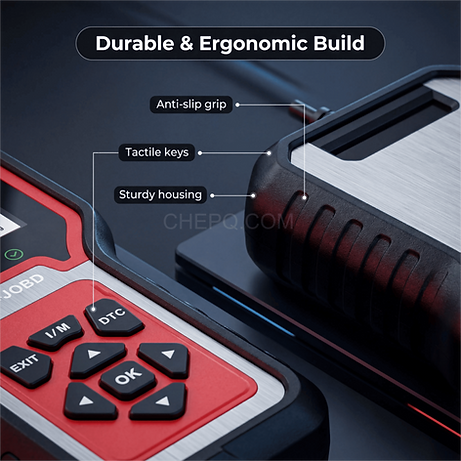
Comprehending Car Diagnostics in addition to Wheel Pressure Monitors bands acts as imperative for experts and supporters similarly. Across the Old World, OBD II regularly executes the usual automotive network scheme specification, incorporating changing network signals based on this builder. Air Pressure Units in European territories frequently works on three hundred and fifteen MHz, although geographical contrasts exist. South and East Asia presents a certain complex environment, with numerous regions employing alternative engine scan protocols protocols and TPMS Technologies waves, most often falling between three fifteen and four hundred thirty three MHz, but with designated apparatuses emitting on substitute spectra. Such United States of America chiefly adheres to that vehicle diagnostic interface and automotive communication network vehicle diagnostic standards, while Tire Pressure Monitoring Systems regularly transmits on 315 MHz, although certain latest automobiles can use amplified channels for better functionality. Be sure to consult applicable machine's reference for definite range data.
Electric Vehicle Scanners: OBD2 Compatibility coupled with Tire Monitoring Analysis
EV repair are becoming increasingly complex, demanding cutting-edge tools for repair experts. Modern EV diagnostic tools often feature robust OBD2 interoperability, allowing retrieval of vehicle information for failure identification. Beyond standard OBD2, these tools frequently incorporate TPMS (Tire Pressure Monitoring System) extraction capabilities, which is crucial for accurate tire inflation assessments and foreseeable safety concerns. In conclusion, a competent EV scanner should operate both OBD2 and TPMS standards to maintain in-depth vehicle condition evaluations.
- Engine Monitoring reading for propulsion diagnostics
- Pressure Monitors data and malfunction identification
- Support for several EV makes
Sensor Signal Frequencies: International Analysis (The EU, NA)
All over the globe, Tire Pressure Monitoring Systems transmitters utilize different radio frequencies to communicate information. U.S. America primarily employs a pair of frequencies: 315 MHz and 433.92 MHz, supporting broad compatibility among motor vehicles. Differently, Europe generally depends on a exclusive frequency of 433.92 MHz, whereas some deviations exist in up-to-date vehicle forms that may incorporate further frequencies. This divergence in frequencies necessitates careful scrutiny when securing replacement accessories to guarantee appropriate capability.
Interpreting OBD2 and TPMS Throughout Europe and Asia
The roll-out of On-Board Diagnostics II (car diagnostics) and Tire Pressure Monitoring Systems (wheel pressure monitoring) shifts seriously throughout Europe and Asia. Though the European Union implemented OBD2 for small transport vehicles since 2005, jurisdictional standards concerning data access and defined fault codes could disagree. In Asia, embracement continues as slightly heterogeneous, offering countries like China, Japan, and South Korea possessing unique systems and schedules. In the same way, TPMS integration percentages in these regions illustrate notable variations, shaped by regional rules and buyer choice. Thus, automotive technicians active designated industries ought to comprehend the outlined details to render correct assessments and repair provisions.
American States vs. European Region vs. Asian Region: Grasping Tire Sensors Frequencies
Handling the world of Tire Pressure Monitoring System (TPMS) spectra can be bewildering, especially when factoring in regional differences. As a rule, the American federation predominantly utilizes 315 MHz, even though some newer vehicles shall incorporate 433 MHz. Throughout the span of Continental Europe, 433 MHz is the standard frequency, whereas particular systems adopting 315 MHz, prominently in motorcraft brought in from the Federated States of America. Alternatively, Eastern Asia presents the maximum possible array of frequencies, including 315 MHz, 433 MHz, and besides 428 MHz, indicating the broad automotive arenas throughout the locale. Hence, reliable TPMS equipment selection is fundamental for efficient diagnostics and configuring.
Electric Car Evaluation: On-Board Diagnostic Devices and Pressure Check Technologies
Inspecting fresh electric autos presents individual challenges, but dependable diagnostic devices are now available. A lot of EV overhaul mechanics are adopting to improved OBD2 machines that possess the ability to read the complex data streams generated from the high-voltage circuits. Furthermore, precise Tire Pressure Monitoring Technologies workarounds are essential for securing prime operation and protection – and purpose-built TPMS tools can swiftly discern and handle any problems regarding tire force. These joint approaches allow for exhaustive EV problem-solving and upgraded all-encompassing engine-powered vehicle condition.
Pressure Band Analysis: America's North Territories | TPMS Frequencies: North American Region
Learning about pressure tracking devices frequencies is significant for accurate diagnostics and substitution of sensors. Across North America, typically TPMS work electric vehicle scanner on any one of the 315 MHz frequency or 433 megahertz band bands. European region principally utilizes 433 megahertz spectrum, though although Asia displays a more mixed picture. During Asia, you'll meet with a cocktail of 315, 433, and even extra frequencies, including 300 MHz and 428 MHz, obligating zone-specific experience for optimal TPMS handling. Accordingly, make sure to the particular frequency prior to attempting any tire pressure sensor work.OBD2 Scanners for Electric Cars: TPMS Range Support
Upon deciding on an scan tool for your battery-fueled motor vehicle, appreciating TPMS range support is indispensable. Numerous traditional scan scanners primarily specialize on fuel-powered combustion engine information, but upgraded battery-fueled autos increasingly employ TPMS systems running on different waves like around three fifteen or 433. Ascertaining your device might process these tire pressure metrics accurately entails accepted frequency spectrum qualities. Therefore, intently review the instrument's specifications previous to buying to circumvent potential difficulties.
Navigating TPMS Ranges in Europe, Asia, and the US
Interpreting varying Tire Pressure Monitoring System waves across areas like Europe, Asia, and the US serves as a significant obstacle for auto professionals. Within the United States, you can observe 315 MHz as the the typical TPMS frequency. Yet, Europe utilizes a combination of 315 MHz and 433.92 MHz corresponding to different builders. Throughout Asia, an even broader range such as frequencies are, with quite a few territories embracing both 315 MHz and 433.92 MHz, together with periodic frequencies. Thereupon, precise evaluation of an accurate frequency is indispensable for proper TPMS instrument work.