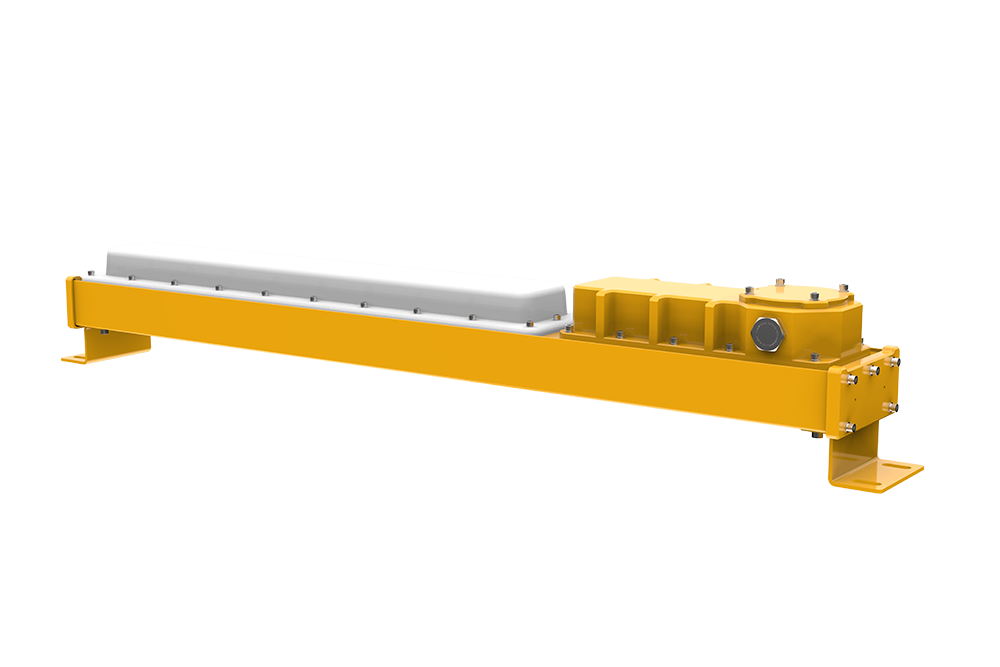
Initiating such write-up discusses these techniques regarding hazard-resistant illumination within construction sites.
Working securely amid treacherous areas like processing sites necessitates select systems with the goal to prevent conceivable hazards. Explosion-proof power fixtures are indispensable elements in similar settings, developed to withstand energy releases, explosive vapors, and flammable environments. Various components are not inherently harmless; instead they are fabricated to enclose any interior arc or flare and prevent it from initiating a larger combustion in the neighboring space. This compendium offers significant information about explosion-proof fixtures, their exploits, and protection points for installing them safely.
Learning Explosion Proof Lighting Standards
Handling relevant explosion-proof lighting codes can be demanding, especially for fields working with hazardous sites. These guidelines – often grounded on official bodies like the National Electrical Standard (NEC), ATEX (Europe), and IEC – set rigorous design and setup processes to limit the vulnerability of ignition from power units. Understanding prescribed standards is important for ensuring worker safety and conformity with statutory responsibilities.
Electroluminescent Intrinsically Safe Luminaires: Productivity & Safeguarding
Photon Emission flammability-rated lights offer a substantial advancement over classic filament systems in sites where explosive chemicals are manifest. These tough apparatus purely produce noteworthy reduced energy consumption, causing decreased energy bills, but more importantly guarantee a greater quality of security by minimizing the potential of explosions attributable to fault faults}.
Explosion Rated Flammable Area Perilous Proof Explosion Blaze Flashpoint Resistant} Devices : A Extensive Review
Explosion Rated Hazardous Place Toxic Proof} Illumination are uniquely designed lighting techniques built to execute safely within conceivably flammable atmospheres. These sturdy fixtures inhibit sparks, energy and electrical currents from setting off a severe explosion. They normally incorporate cutting-edge designs, comprising such as tight housings and naturally safe power assemblies to maintain safety standards in domains like crude & gas processing, production plants, extraction operations, and medicinal production.
Determining the Correct Flameproof Fixtures for Unsafe Zones
Recognizing the optimal explosion-proof devices for a specific controlled region calls for comprehensive assessment. Variables such as the designation (e.g., Level I, II, or III and zones A) must be exactly verified to secure conformity with applicable hazard control regulations. Apart from the area's typical menaces, consider surrounding features, including thermal state and condensation, to find a long-lasting and harmless approach. Always confide in a professional authority to assist your judgment.
Environments Where Require Explosion Proof Lights?
Explosion-proof alternatively intrinsically safe|hazardous location|Class-rated} illumination units are undeniably needed in diverse areas where combustible liquids or particles could plausibly create a toxic atmosphere. This generally includes chemical refining plants, varnish application areas, crop handling facilities, and liquid waste treatment sections. Regulations, such as those from UL and ATEX, stipulate their application in these facilities to deter the risk of ignition and ensure safety integrity.
Advantages of Light Emitting Diode in Hazardous Location Fixtures
Adopting Luminescent technology for blast-proof devices offers a noteworthy range of perks. First, luminescent sources boast a markedly longer duration compared to traditional vapor lights, reducing maintenance costs and idle times. They are also primarily safer, producing attenuated thermal flux which curtails the potential of combustion in dangerous atmospheres. Over and above, electroluminescent units are markedly energy saving, leading to minimized energy bills and a lowered natural mark. Finally, the durable configuration of Crystal-Based assemblies endures the stringent milieus typical of fire-safe areas.
- Increased Longevity
- Lessened Servicing Costs
- Elevated Protection
- Abated Current Costs
- Heightened Toughness
Preserving and Testing Explosion Proof Lighting Systems
Scheduled maintenance and complete examination of detonation-proof lighting networks are importantly necessary for ensuring protection and avoiding potential pitfalls. This requires a recurrent review of all elements, such as light fittings, tubing, current conduits, and related distribution boxes. Especially, assess for degradation, structural faults, and sufficient earthing wire. Moreover, validate that total tags are understandable and that the illumination fulfills authorized codes.
- Carry out visual checks.
- Examine wire interfaces.
- Verify spark protection.
Forward Outlook of Explosion Proof Lighting Technology
Growing landscape of explosion-proof appliances technology promises a notable shift from traditional designs. Future methods will more and more incorporate intelligent capabilities, enabling remote monitoring, diagnostics, and programmable control. We predict a broadening adoption of crystal-based technology, not only for its primary energy efficiency, but also its ability to facilitate embedded sensors for monitoring risky conditions. Besides, materials exploration is accelerating innovations in tough covering materials, allowing for trimmed and upgraded designs, while maintaining the required levels of protection.
- Enhanced battery life for mobile applications.
- Merge with preventive maintenance frameworks.
- Innovation of maintenance-free lens approaches.